Denim Laundry Wastewater: What Enzyme-Based Abrasion Changes and What It Does Not
Denim laundries are under pressure from both sides: brands want sharper abrasion, cleaner shade control, and softer handfeel, while plants need fewer rewashes, lower mechanical damage, and more predictable wastewater behavior.
Enzyme-based abrasion is not a wastewater treatment system. It does not make indigo, auxiliaries, fibers, or finishing chemistry disappear. But when specified correctly, it can change the way abrasion is achieved — and that can reduce several sources of wastewater load before they reach the drain.
For laundry managers evaluating an enzyme supplier for denim washing, the real question is not whether enzymes are “green” in a general sense. The practical question is: what does enzyme abrasion change in the process, what remains unchanged, and where does the wastewater plant still carry the load?
The Abrasion Problem Starts Inside the Drum
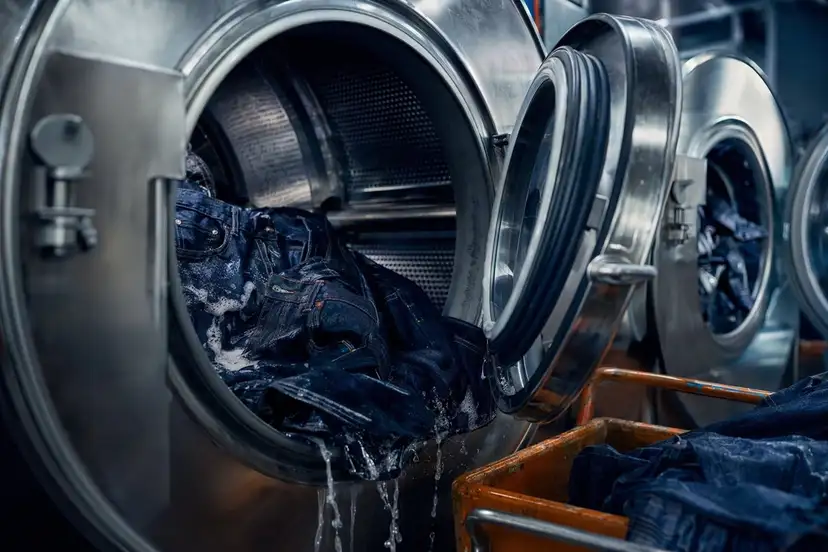
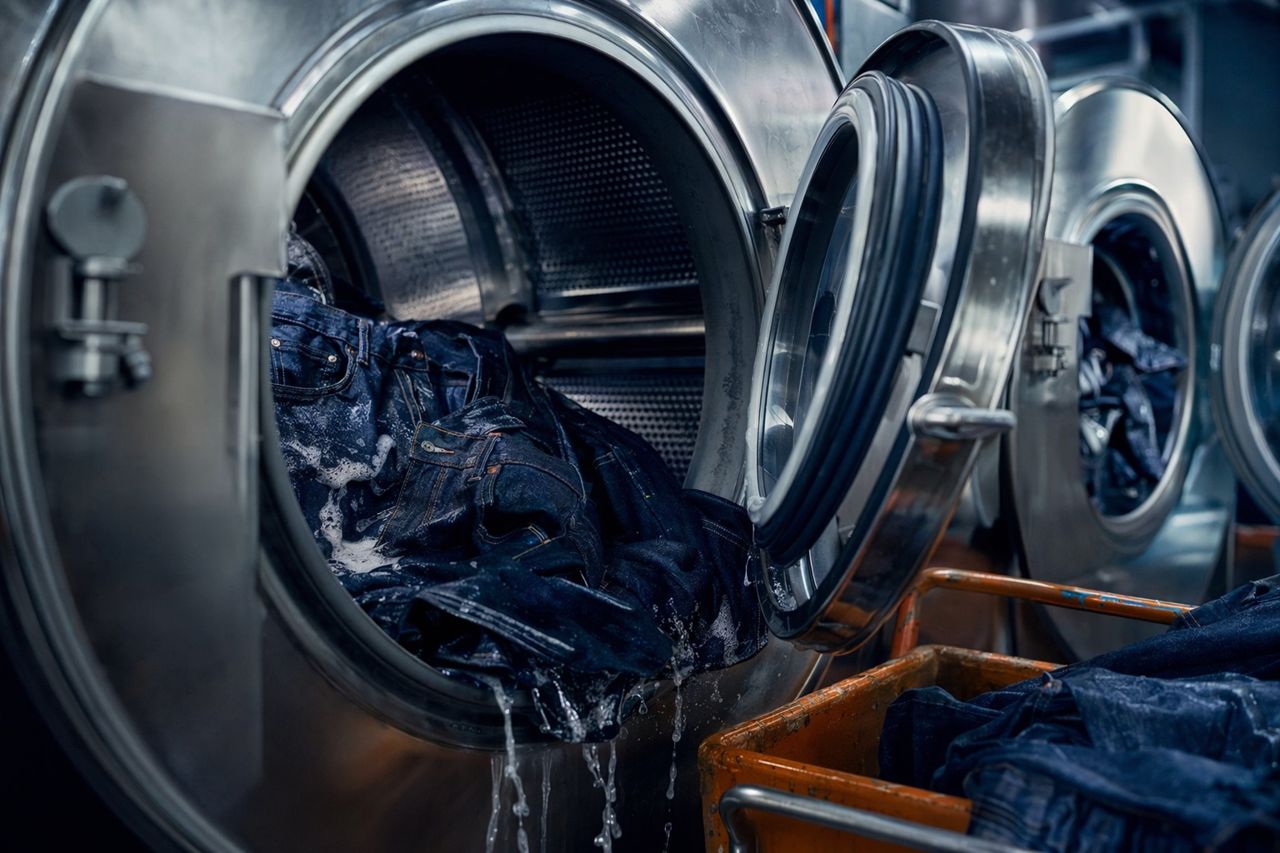
Traditional denim abrasion depends heavily on mechanical force. Pumice stones, high friction, long run times, and aggressive liquor movement all contribute to the worn-down look. They also create operational side effects:
- Stone dust and grit entering screens, drains, and sludge streams
- Higher lint and cotton fines from excessive mechanical damage
- More broken seams, crease marks, and panel inconsistency
- Wider shade variation between lots
- Greater risk of backstaining when released indigo redeposits
- Longer cleanout time between dark, medium, and light programs
Enzyme abrasion changes the balance. Instead of relying only on mechanical impact, cellulase enzymes act on exposed cotton fibers at the denim surface. The result is controlled surface modification: fuzz reduction, cleaner contrast, improved abrasion development, and a softer touch when the program is tuned correctly.
That does not eliminate wastewater. It changes the input profile.
What Enzyme-Based Abrasion Can Change
1. Lower Dependence on Pumice and Mechanical Grit
One of the clearest process changes is reduced reliance on pumice stones. In many programs, enzymes allow a laundry to reduce stone load or move toward pumice-free abrasion concepts, depending on the target finish and fabric construction.
This matters because pumice contributes insoluble mineral solids and creates cleanout labor. Less stone means less grit moving through the system, less drum cleaning, and fewer downstream blockages around screens and settling points.
For laundries running premium denim, this can also support cleaner garment handling. Less uncontrolled stone impact can reduce localized damage and improve repeatability on seams, pockets, and high-wear zones.
2. More Controlled Fiber Removal
Enzymes do not stop fiber release. Denim washing still produces cotton lint and suspended solids. But enzyme abrasion can make fiber removal more controlled compared with high-friction abrasion alone.
When the enzyme system is matched to fabric weight, warp/weft behavior, and abrasion target, surface fibrils are modified without pushing the garment into excessive mechanical breakdown. That can help reduce loose fuzz, improve surface clarity, and limit the over-processing that creates rewash risk.
The wastewater benefit is indirect but important: fewer aggressive corrections, fewer repeat washes, and less unnecessary mechanical damage.
3. Shorter or More Flexible Process Windows
Denim laundries rarely run one perfect fabric in one perfect temperature range. Incoming lots vary. Water temperature shifts. Machine loading is not always ideal. Enzyme programs that tolerate realistic plant conditions can help maintain abrasion targets without extending cycles unnecessarily.
Temperature flexibility is especially valuable when laundries need to manage steam use, fabric sensitivity, or seasonal water variation. A stable enzyme program can keep results inside an acceptable shade and handfeel window without forcing the plant into longer corrective processing.
Less correction means less water, fewer auxiliaries, and fewer wastewater swings.
4. Better Backstaining Control When Paired With the Right Program
Backstaining is not caused by enzymes alone. It is a system issue involving released indigo, liquor ratio, pH, dispersing strategy, machine action, load size, fabric chemistry, and rinse performance.
However, the right enzyme selection can reduce uncontrolled surface damage and help support cleaner shade development. When paired with anti-backstaining auxiliaries, appropriate rinsing, and correct bath control, enzyme abrasion can help laundries hit the target look with fewer shade corrections.
This is where supplier support matters. A good enzyme supplier for denim washing should not only ship product. They should help define the operating window for shade control, contrast, rinse strategy, and rewash prevention.
5. Lower Rewash and Reject Pressure
Wastewater discussions often focus on what leaves the drum after one cycle. In production, the bigger issue may be the second cycle: the correction wash, the extra rinse, the shade recovery, the rejected panel, the reprocessed lot.
Enzyme abrasion helps when it improves first-pass consistency. If a laundry can reduce shade drift, avoid over-abrasion, and hit the approved standard more often, wastewater load is reduced through avoided reprocessing.
This is not a lab claim. It is a production KPI.
What Enzyme Abrasion Does Not Change
It Does Not Replace Wastewater Treatment
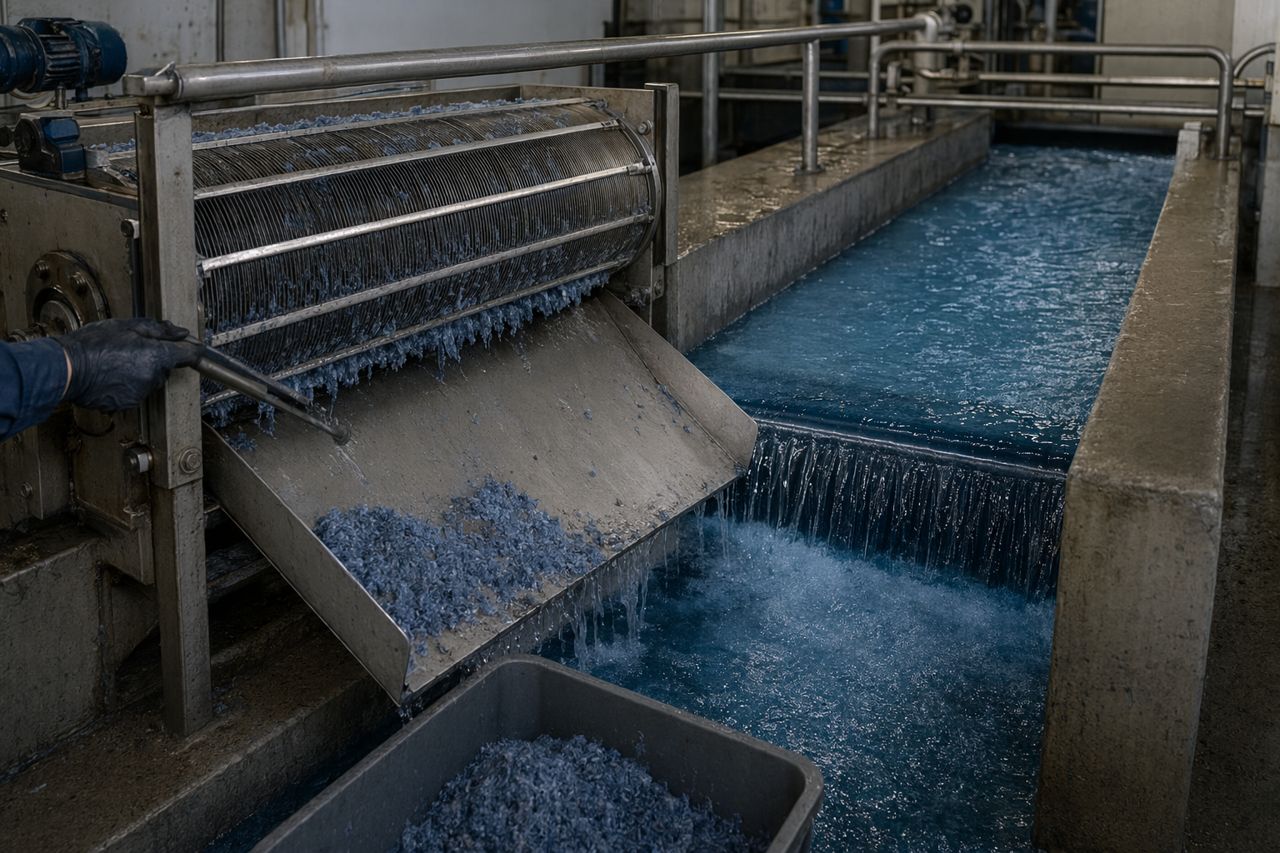
A denim laundry still needs screening, settling, biological or chemical treatment where applicable, sludge handling, and discharge compliance management. Enzymes are process tools, not end-of-pipe treatment systems.
If a plant has high chemical oxygen demand, suspended solids, color load, or variable pH, enzyme abrasion may reduce certain upstream contributors, but it will not remove the need for a properly managed treatment plant.
It Does Not Remove Indigo Color Load by Itself
Enzyme washing releases indigo from the denim surface as abrasion develops. That color still enters the bath. Depending on the look, fabric, and rinse sequence, the wastewater color profile may remain significant.
Enzymes can support more controlled fading, but they are not decolorizing agents in a standard abrasion program. Indigo management still requires bath control, rinse discipline, treatment strategy, and prevention of redeposition on garments.
It Does Not Eliminate Cotton Fines
Because denim abrasion involves surface modification, cotton fines and lint remain part of the process. A well-controlled enzyme program can reduce excessive mechanical damage, but it does not produce a fiber-free effluent.
Plants should still monitor lint capture, filter cleaning, sludge behavior, and machine-to-treatment flow consistency.
It Does Not Fix Poor Loading or Weak Process Control
Enzymes are sensitive to process discipline. Overloaded machines, inconsistent water levels, poor temperature control, incorrect sequencing, or delayed neutralization can undermine results.
If the process is unstable, enzymes will not compensate for every variation. The program must be designed around real equipment, real garments, and real operator practice.
Where the Wastewater Benefit Usually Comes From
For most laundries, the wastewater advantage of enzyme-based abrasion is not one single change. It comes from several production improvements working together:
- Reduced pumice or stone-free processing where finish targets allow
- Less mineral grit and machine cleanout residue
- Lower risk of over-processing and excessive fabric damage
- More consistent shade and abrasion between batches
- Fewer correction washes and rejects
- Better control of backstaining when the total wash system is tuned
- Potential cycle optimization under practical temperature conditions
The best results come when enzyme selection is connected to the finish standard, not treated as a drop-in commodity.
How to Specify Enzyme Supply for Denim Laundry Wastewater Goals
When discussing supply, avoid vague requests like “a sustainable enzyme” or “a strong cellulase.” Instead, define the production problem clearly.
A useful specification should include:
- Target finish: dark rinse, mid wash, vintage abrasion, salt-and-pepper contrast, low-fuzz surface, soft handfeel, or premium clean-down.
- Fabric profile: weight, yarn character, stretch content, sulfur or indigo behavior, and garment construction details.
- Machine reality: drum type, load size, liquor practice, temperature range, and current cycle constraints.
- Pain points: backstaining, shade variation, seam damage, lint load, stone residue, excessive rejects, or long cleanout time.
- Wastewater focus: suspended solids, sludge volume, color variation, pH swings, screen blockage, or rewash-related water use.
- Acceptance criteria: approved shade band, abrasion level, handfeel, shrinkage tolerance, and first-pass approval rate.
This gives the enzyme supplier enough context to recommend a practical program, not just a product name.
Practical Plant Trials: What to Watch
A plant trial should compare more than the garment look. For wastewater-related decisions, track the full operational picture.
Useful trial observations include:
- Abrasion development at the same or adjusted process time
- Shade consistency across panels and batches
- Backstaining on pocketing, labels, seams, and light zones
- Handfeel after neutralization and finishing
- Lint and fines captured at screens
- Stone residue or grit reduction if pumice is reduced
- Machine cleanout time
- Rewash rate and reason codes
- Operator ease and process repeatability
The goal is not to claim that enzymes solve wastewater. The goal is to confirm whether enzyme abrasion reduces upstream stress while still meeting the approved denim standard.
The RivetTide View
RivetTide supplies enzyme solutions for denim laundries that need controlled abrasion, cleaner shade execution, and repeatable finish outcomes. We look at wastewater impact through the production route: less uncontrolled mechanical abrasion, fewer corrections, better backstaining control, and a more stable wash window.
That is the value of enzyme-based abrasion when it is specified properly. It does not replace treatment. It helps the laundry avoid creating avoidable burden in the first place.
Request a Quote
If your laundry is reviewing pumice reduction, backstaining control, shade consistency, or rewash prevention, share your wash target and current process constraints with RivetTide.
Request a quote through the on-site form and we’ll help define an enzyme supply option for your denim washing program.