How to Document a Denim Wash Trial So Production Can Repeat It
A denim wash trial is only useful if the production team can run it again without guessing.
The target is not just a good sample. The target is a repeatable process: same shade direction, same abrasion level, controlled backstaining, acceptable handfeel, and fewer arguments at final inspection.
For laundry managers evaluating an enzyme supplier for denim washing, documentation is part of the chemistry. The enzyme choice matters, but so does the way the trial is recorded, corrected, approved, and translated into the production recipe.
Why denim wash trials fail in scale-up
Most failed scale-ups are not caused by one dramatic mistake. They usually come from small missing details:
- Trial load was lighter than production load
- Garments had a different fabric lot or construction mix
- Water temperature shifted during the enzyme stage
- pH was checked late or not logged clearly
- Abrasion looked right wet but changed after drying
- Backstaining was judged by memory, not side-by-side panels
- A successful correction was made but never written into the final sequence
The result is shade drift, rewash, extra rinsing, delayed approvals, and pressure on operators to recreate a finish from incomplete notes.
Start with the commercial wash target
Before the machine starts, define the finish in production language.
Record the target clearly
Include:
- Buyer, style, fabric lot, and garment construction notes
- Target shade family: dark vintage, mid-blue, salt-and-pepper, high-low contrast, or clean-down look
- Abrasion expectation: seam highs, pocket edges, whisker support, overall surface break
- Backstaining tolerance on pocket bags, labels, weft areas, and light trims
- Handfeel target: crisp, worn-in, soft, compact, or open
- Any restrictions on pumice, water use, rewash risk, or temperature window
This gives the enzyme trial a production brief, not just a lab objective.
Build a trial sheet operators can actually use
A trial sheet should be fast to read on the plant floor. Keep it structured and avoid free-form notes as the main record.
Core trial fields
Capture:
- Trial date and machine number
- Operator and technical lead
- Garment count and load condition
- Fabric lot and incoming shade notes
- Pre-wet or desize condition before enzyme stage
- Enzyme product name and addition point
- Water level description and bath condition
- Temperature window and pH target
- Mechanical action setting or machine program
- Time in each stage
- Rinse, neutralization, softener, extraction, and drying sequence
Do not rely on the recipe name alone. Two recipes with the same name can behave differently if load condition, incoming shade, or temperature control changes.
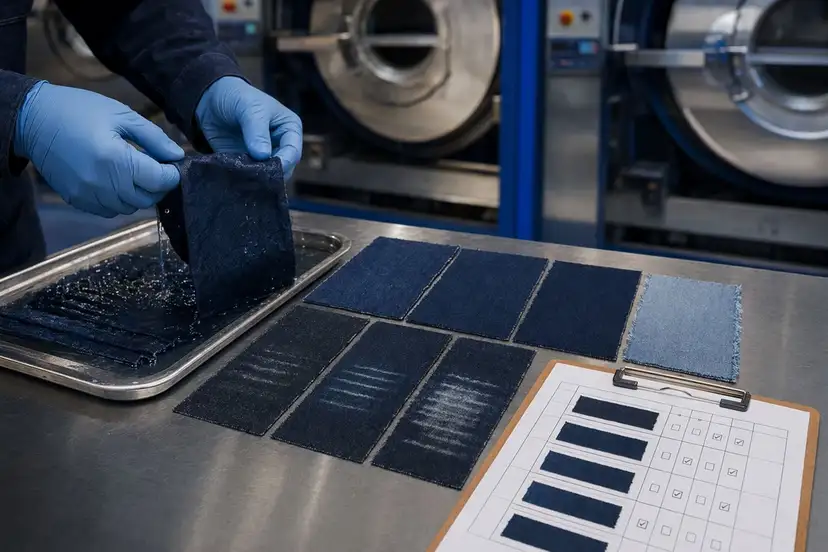
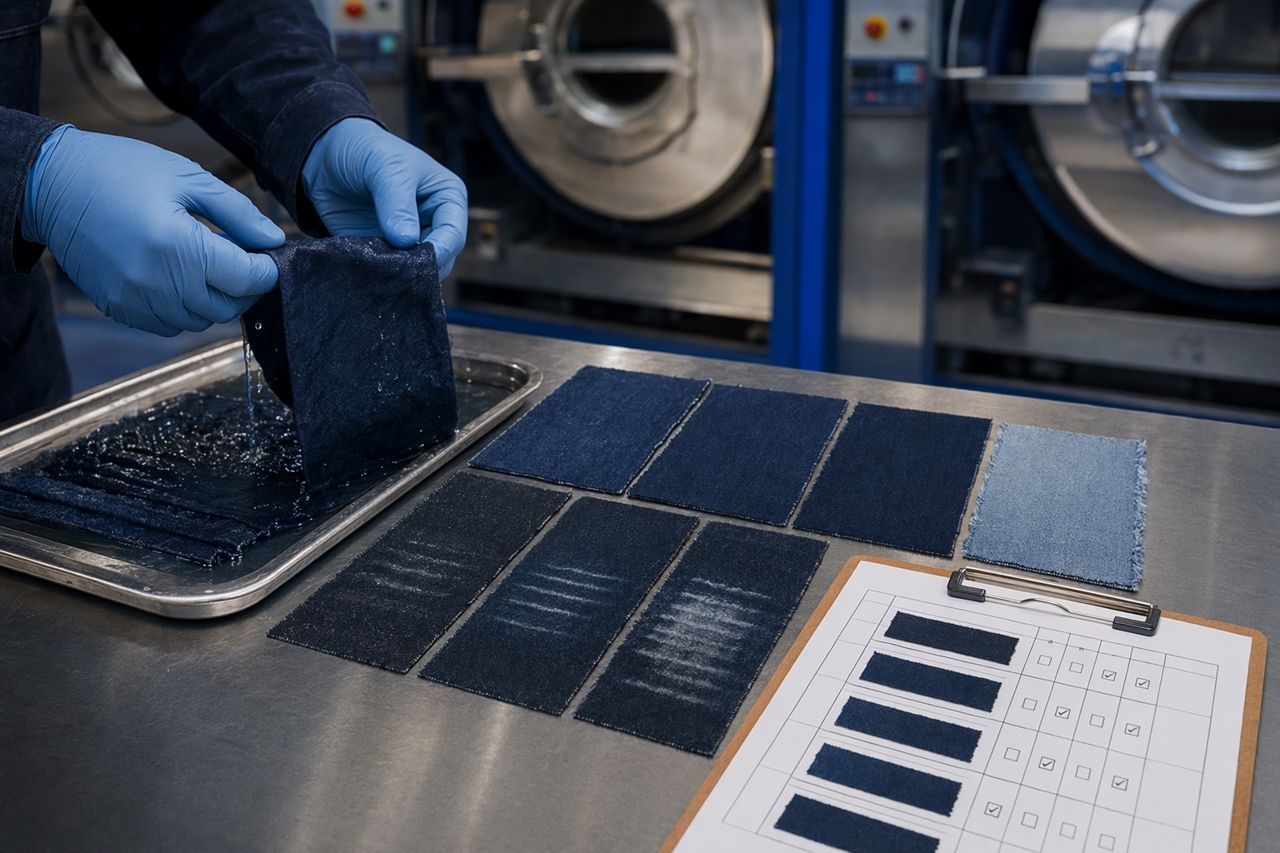
Photograph the trial like evidence
Photos should help production compare results, not decorate a report.
Minimum image set
Take controlled photos of:
- Before-wash garment panel
- Wet garment after enzyme stage
- Dry garment after full process
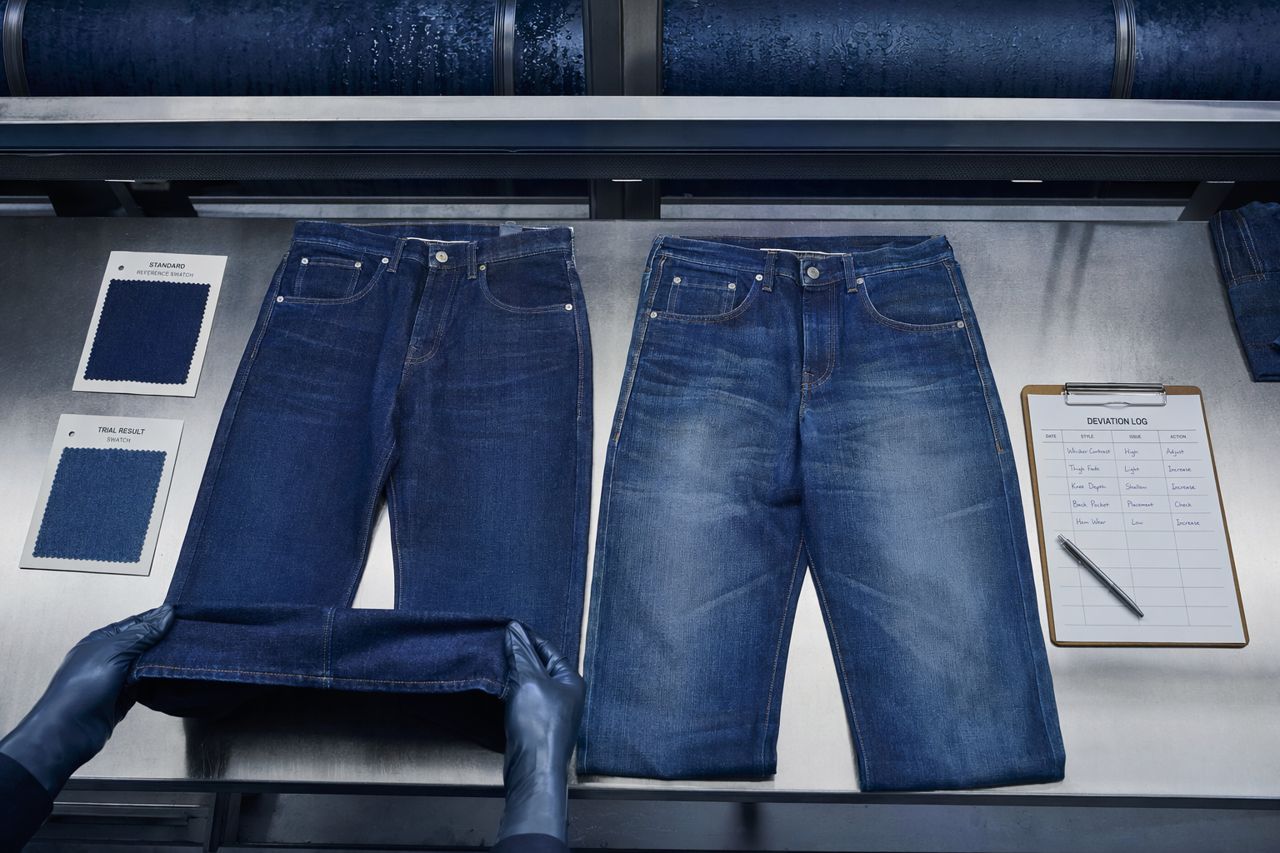
- Side-by-side comparison with approved standard
- Close-up of seams, pocket edges, waistband, and hem
- Pocket bag or light trim for backstaining check
- Any problem area that triggered a correction
Use the same light, angle, background, and camera distance where possible. Label each image with trial number, stage, and garment position.
Separate shade, abrasion, backstaining, and handfeel
A common documentation error is writing one general approval note, such as good wash or close to standard. That does not help the next operator.
Break the evaluation into four practical categories.
Shade control
Record whether the shade is:
- Too dark
- Too flat
- Too red or too green in cast
- Too bright after drying
- Acceptable against standard
Abrasion target
Record where abrasion is correct and where it is not:
- Seams
- Pocket edges
- Thigh panels
- Waistband
- Hem
- Overall surface break
Backstaining reduction
Check indigo redeposition on:
- Pocket bags
- Labels
- Weft-facing areas
- Light threads
- Contrast trims
Backstaining should be judged after drying, not only in the wet state.
Fabric handfeel
Record whether the enzyme stage created the intended handfeel without over-softening, excessive surface fuzz, or loss of fabric character.
Log every correction one at a time
If the trial misses target, make one controlled correction and document it. Changing enzyme level, time, temperature, pH, and mechanical action together may produce a pass, but it will not explain why.
Useful correction notes
Write:
- What was changed
- Why it was changed
- Which defect it was meant to correct
- What improved
- What got worse
- Whether the change affects cycle time, rinse demand, or shade stability
This creates a correction history that protects production from repeating dead ends.
Convert the approved trial into a production recipe
An approved sample is not the final document. The final step is translation into a production-ready recipe.
Lock the sequence
Document the complete order:
- Garment loading condition
- Wetting or pretreatment
- Enzyme stage
- Rinse strategy
- Neutralization or stop step where required
- Softening or handle adjustment
- Extraction
- Drying condition
- Final inspection criteria
Add clear checkpoints where operators must confirm shade, bath condition, or backstaining before moving forward.
Keep a deviation log during first production
The first production run should carry a deviation log beside the recipe. This is where real plant conditions show up.
Track:
- Machine-to-machine shade variation
- Load differences
- Water temperature movement
- Rinse clarity
- Foam behavior
- Drying influence on cast
- Rewash or repair count
- Inspector comments
If the production run matches the approved trial, mark it as the working standard. If not, update the recipe with the exact correction that closed the gap.
What to send when requesting enzyme support
When you contact RivetTide, include the records that show the wash problem clearly.
A useful brief includes:
- Target finish photo and current result photo
- Fabric and garment construction notes
- Current wash sequence
- Pain point: shade drift, low abrasion, backstaining, harsh handfeel, long cycle, or rewash rate
- Water-temperature range used in production
- Any restrictions on pumice, rinsing, or fabric strength
- Batch size and machine type, described operationally
This helps us recommend an enzyme direction that fits your wash target and production constraints.
Production takeaway
A strong denim wash trial record does three jobs:
- It proves why the sample passed
- It shows production how to repeat it
- It gives the technical team a clean path for correction when the fabric, machine, or buyer standard changes
If your laundry is building a new denim finish or tightening control on an existing recipe, RivetTide can help align enzyme selection with shade control, abrasion targets, backstaining reduction, handfeel, and cycle efficiency.
Ready to review a wash target? Use the on-site request a quote form and send your trial brief.