Indigo Cast Control in Denim Finishing: Why Two Washes with the Same Recipe Can Look Different
In denim laundry, the recipe is only part of the finish. Two batches can run with the same garment style, same time, same temperature, same enzyme addition, and still leave the washer with a different indigo cast.
That difference shows up fast: a panel looks slightly greener, redder, flatter, or dirtier than the approved standard. The abrasion target may be close, but the cast is off. For a laundry manager, that means shade sorting pressure, extra rinsing, rewash risk, and a harder conversation with the brand QC team.
As an enzyme supplier for denim washing, RivetTide looks at indigo cast as a process outcome, not a lab note. Cast control depends on fiber condition, dye release, redeposition, liquor movement, chemistry balance, and how consistently the enzyme system behaves across real production loads.
Why indigo cast shifts inside the washer
Indigo finishing is a controlled removal process. The goal is not just to lighten denim. The goal is to remove and redistribute color in a way that matches the target shade, contrast, handfeel, and surface character.
Cast variation can come from several production variables that are easy to underestimate.
1. Fabric history is not always identical
Two lots that look similar before washing may not respond the same way. Ring-dye depth, yarn tension, fabric construction, sulfur bottoming, resin exposure, and storage conditions can change how the surface opens under enzyme treatment.
When the fabric surface reacts differently, the washer may remove indigo at a different rate or expose a different undertone. The recipe stays the same. The garment does not.
2. Abrasion and cast are linked
Cellulase systems are often selected to build surface abrasion, improve softness, reduce harsh mechanical dependency, or support pumice-free effects. But abrasion is not separate from cast. As the surface fiber layer changes, the visible indigo balance changes with it.
A wash that pushes abrasion too aggressively may create a washed-down look before the desired cast is stable. A wash that is too mild may leave the fabric dark, flat, or inconsistent across seams, thighs, waistbands, and pocket zones.
3. Backstaining changes the perceived shade
Released indigo does not simply disappear. If it redeposits onto cotton, pocketing, labels, sewing thread, or exposed weft areas, the garment can look duller and dirtier. This is often read as a cast problem, even when the core shade level is near target.
Backstaining control is especially important when laundries are reducing water use, shortening rinse sequences, or running higher garment loads. Less process margin makes redeposition easier to see.
4. Water and temperature flexibility matter
Production water is not constant. Mineral content, pH drift, seasonal temperature changes, and plant utility variation can all influence enzyme behavior and indigo release. A recipe approved in one week may become less stable when incoming water or actual bath temperature changes.
For denim laundries running multiple styles and buyers, flexible enzyme performance helps protect shade repeatability without forcing constant recipe correction.
The hidden cost of small cast differences
A minor cast shift can create major operational waste.
- More shade bands at inspection
- Extra rinses to clean up dullness or redeposition
- Rewash cycles that damage handfeel and garment strength
- Slower approvals on repeat orders
- Higher dependency on manual correction
- Increased risk of mixed-shade cartons
The cost is not only chemical or water consumption. It is lost washer capacity, delayed shipment flow, and reduced confidence in repeat programs.
What to control before blaming the recipe
When the same recipe gives different results, start with the variables that most often move cast.
Load discipline
Overloading changes liquor movement, garment-to-garment contact, and seam exposure. Underloading can increase mechanical action and push abrasion faster than expected. Keep load weight, garment count, and style mix consistent when comparing batches.
Enzyme addition point
The timing of enzyme addition affects how quickly the fabric surface begins to open. Delayed addition, poor dilution, or uneven distribution can create shade variation within the same machine. A repeatable dosing routine is as important as the enzyme choice.
Bath conditions
Track actual bath temperature and pH, not just the set point. Denim finishing is sensitive to what happens inside the drum after garments absorb liquor, chemistry is added, and machine motion begins.
Rinse strategy
Short rinses can support cycle-time goals, but poor indigo removal may increase backstaining. The rinse package should match the enzyme system, desired cast, and final cleanliness target.
Mechanical profile
Drum speed, rotation pattern, machine type, and fabric loading all influence abrasion. If a recipe transfers from one washer to another, cast can shift even when chemical inputs remain unchanged.
How enzyme selection supports cast control
The right enzyme system helps the laundry target a defined finish window instead of chasing corrections after inspection.
RivetTide enzyme solutions for denim washing are selected around production outcomes:
- Controlled surface abrasion without excessive strength loss
- Cleaner indigo release with reduced backstaining risk
- Consistent shade development across repeat batches
- Better handfeel without over-processing
- Usable performance across practical plant temperature ranges
- Compatibility with modern low-stone and pumice-free finishing routes
For laundry teams, this means fewer surprises between lab approval and bulk production. The objective is not maximum reaction. The objective is usable control inside the washer.
A practical cast-control workflow
Use this workflow when evaluating a new enzyme program or troubleshooting a repeat order.
Step 1: Lock the visual target
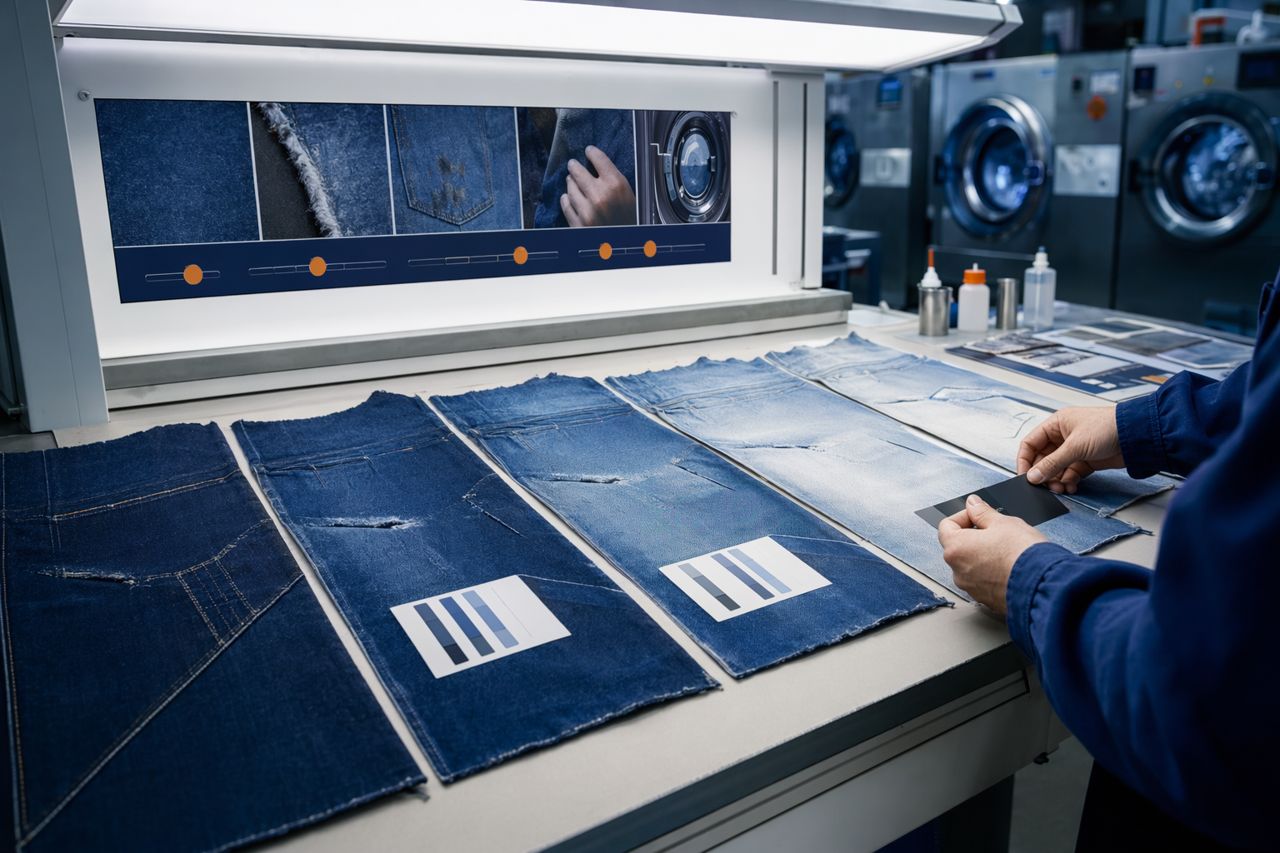
Define the approved standard with clear limits for shade, cast, abrasion, contrast, pocket cleanliness, and handfeel. If only the front panel is evaluated, the process may miss seam, waistband, or inside-pocket variation.
Step 2: Run a controlled pilot load
Use production-style garments, not only cut panels. Record actual load weight, water level, bath temperature, pH, time, machine type, and rinse sequence. Compare wet and dry appearance, because indigo cast often reads differently after drying and finishing.
Step 3: Separate abrasion from backstaining
If the garment is dull, determine whether the issue is insufficient indigo removal, excess redeposition, or over-abrasion. Each problem needs a different correction.
Step 4: Adjust within a narrow window
Large recipe changes create new variables. Start with focused adjustments to enzyme selection, dose range, time, bath condition, or rinse design. Confirm that handfeel and garment strength remain acceptable.
Step 5: Repeat before scaling
A single good trial is not a production standard. Repeat the load under realistic plant conditions to confirm shade consistency before moving to larger volume.
Where RivetTide fits in the laundry decision
RivetTide supports denim laundries that need reliable enzyme supply tied to measurable finishing performance. We help production teams evaluate enzyme options for cast control, abrasion targets, backstaining reduction, handfeel, and cycle-time fit.
Our role is straightforward: provide enzyme systems that work in industrial denim washing conditions and help your team build a repeatable operating window.
When to review your enzyme program
It may be time to review your enzyme package if you are seeing:
- Approved washes drifting in repeat production
- Excessive shade sorting after drying
- Dull or dirty cast from indigo redeposition
- Abrasion that develops faster than shade control
- Frequent rewash to clean up tone
- Poor transfer from sample machine to bulk washer
- Inconsistent performance across water-temperature changes
These are not just QC issues. They are process-control issues.
Request a quote for denim washing enzymes
If your laundry is working on indigo cast control, cleaner abrasion, lower backstaining, or repeatable denim shade development, RivetTide can help specify an enzyme solution for your production conditions.
Request a quote and share your garment type, target finish, machine setup, current wash route, and main production challenge.