Laser, Ozone, and Enzyme Finishing: Where Each Tool Fits in a Modern Denim Plant
Modern denim finishing is not a choice between laser, ozone, or enzymes. In a controlled laundry, each tool has a clear job.
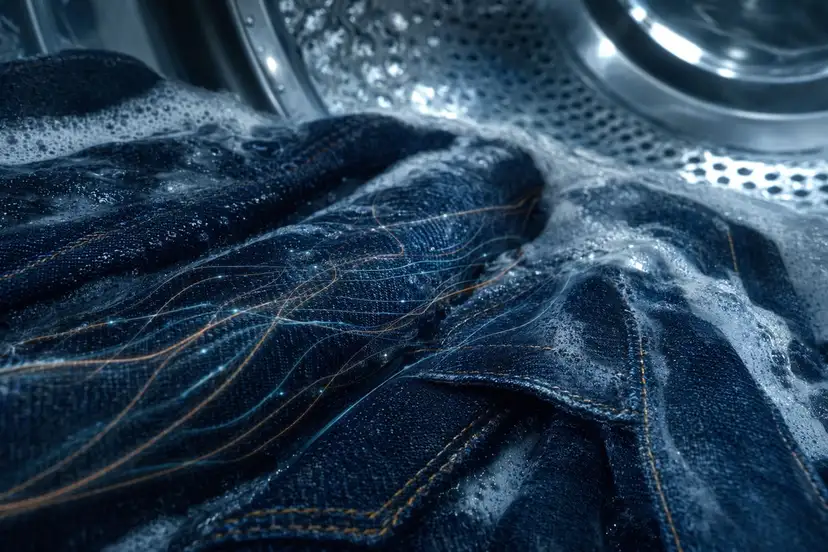
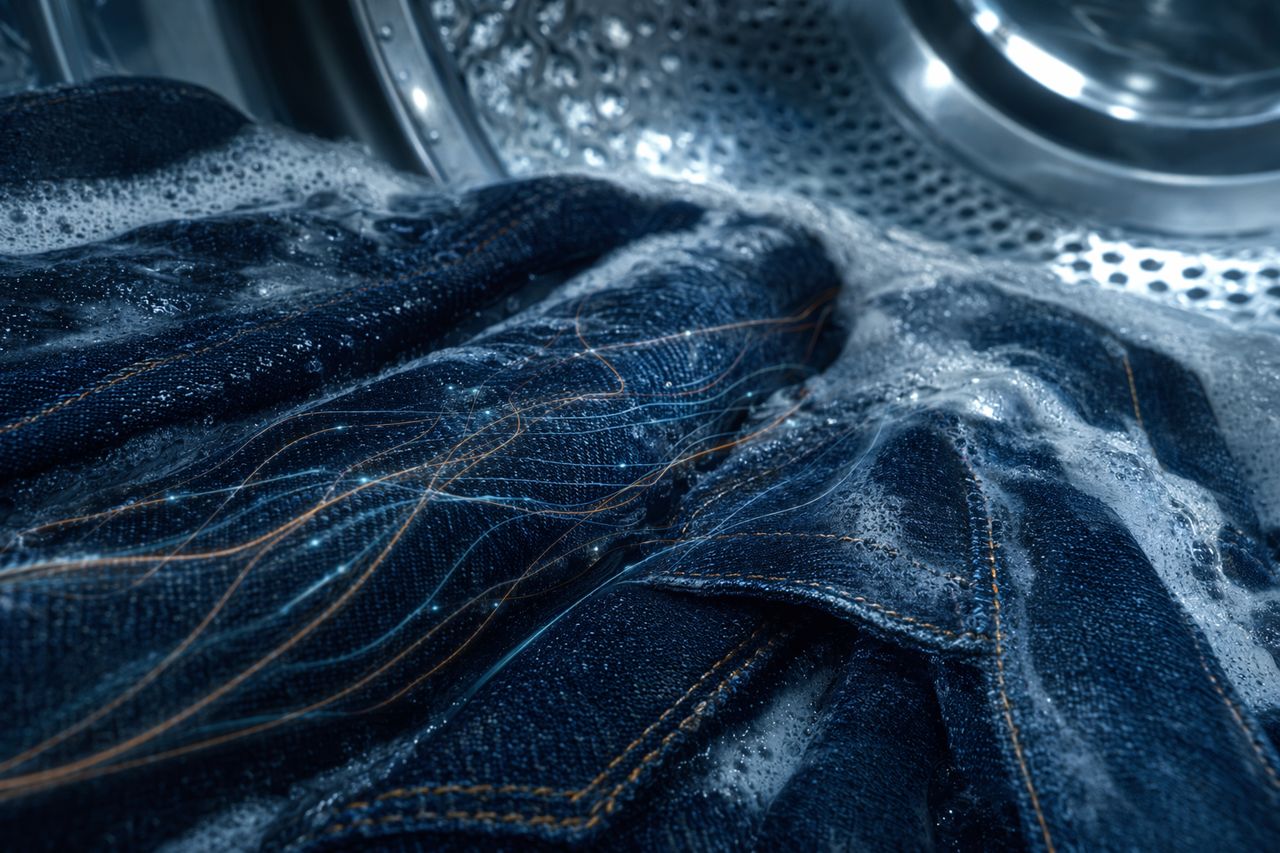
Laser gives repeatable dry abrasion. Ozone shifts indigo shade with low water input. Enzymes handle wet-process correction, controlled bio-polishing, backstaining reduction, handfeel development, and shade balancing across real production batches.
For a denim laundry manager, the question is not which technology is more advanced. The question is where each step creates the most reliable finish with the least rework.
RivetTide works as an enzyme supplier for denim washing, supporting plants that need consistent abrasion targets, controlled cast, cleaner pockets, softer handfeel, and flexible processing across temperature ranges and fabric constructions.
The role of laser: precise dry abrasion before wet processing
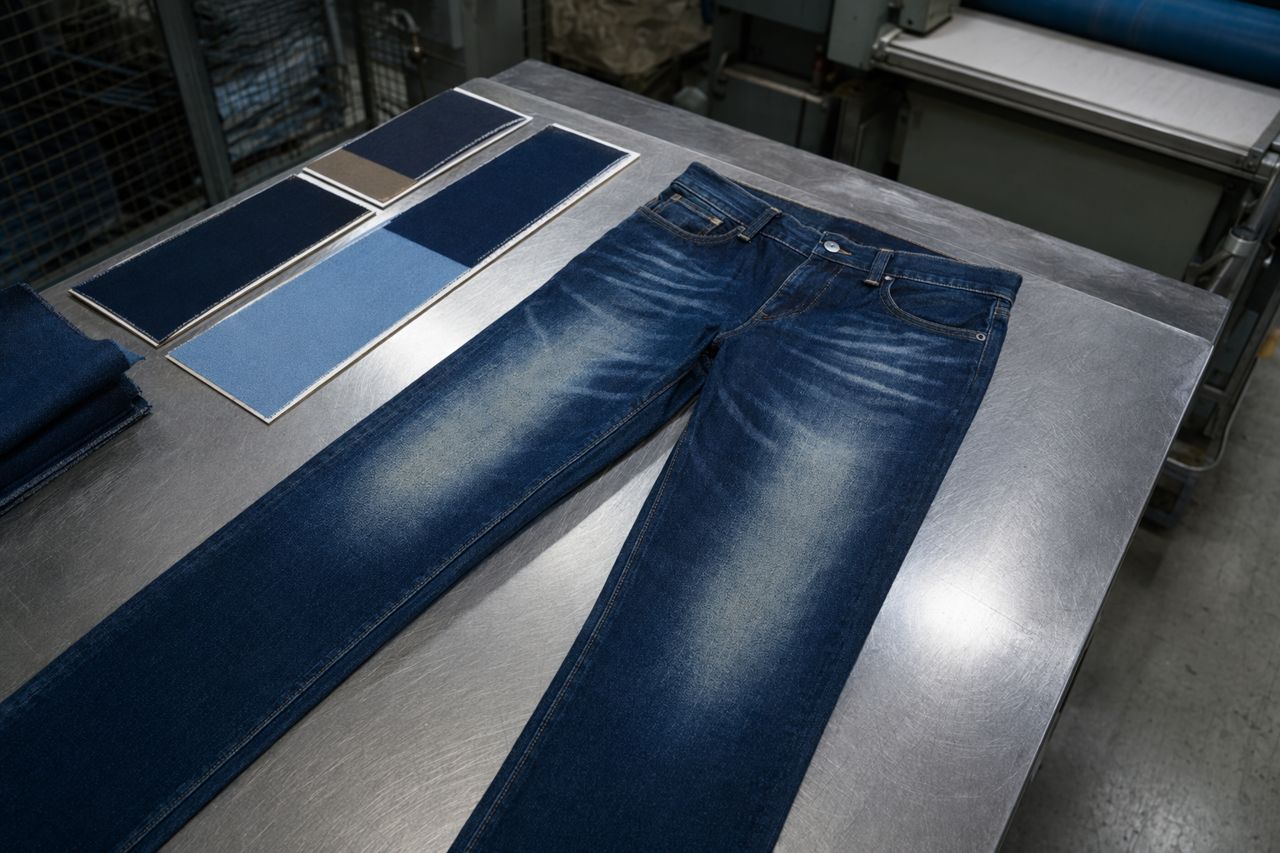
Laser finishing is strongest when the plant needs high repeatability on dry garment effects:
- Whiskers
- Thigh abrasion
- Honeycombs
- Localized contrast
- Template-driven vintage marks
- Reduced manual scraping variation
Laser gives pattern control before the garment enters wet processing. It reduces dependence on hand scraping skill and can improve consistency across operators, shifts, and styles.
Where laser performs best
Laser works well for visible, repeatable abrasion maps. It is especially useful when brands want the same worn pattern across a large order, or when the laundry wants to reduce manual damage risk.
Where laser needs support
Laser does not fully replace wet finishing. It does not deliver the same fabric handfeel development, bath-level shade balancing, or enzymatic surface cleanup. After laser, the garment still needs controlled washing to remove residues, stabilize shade, and build the final touch.
This is where enzyme selection matters.
The role of ozone: shade shift with lower liquor movement
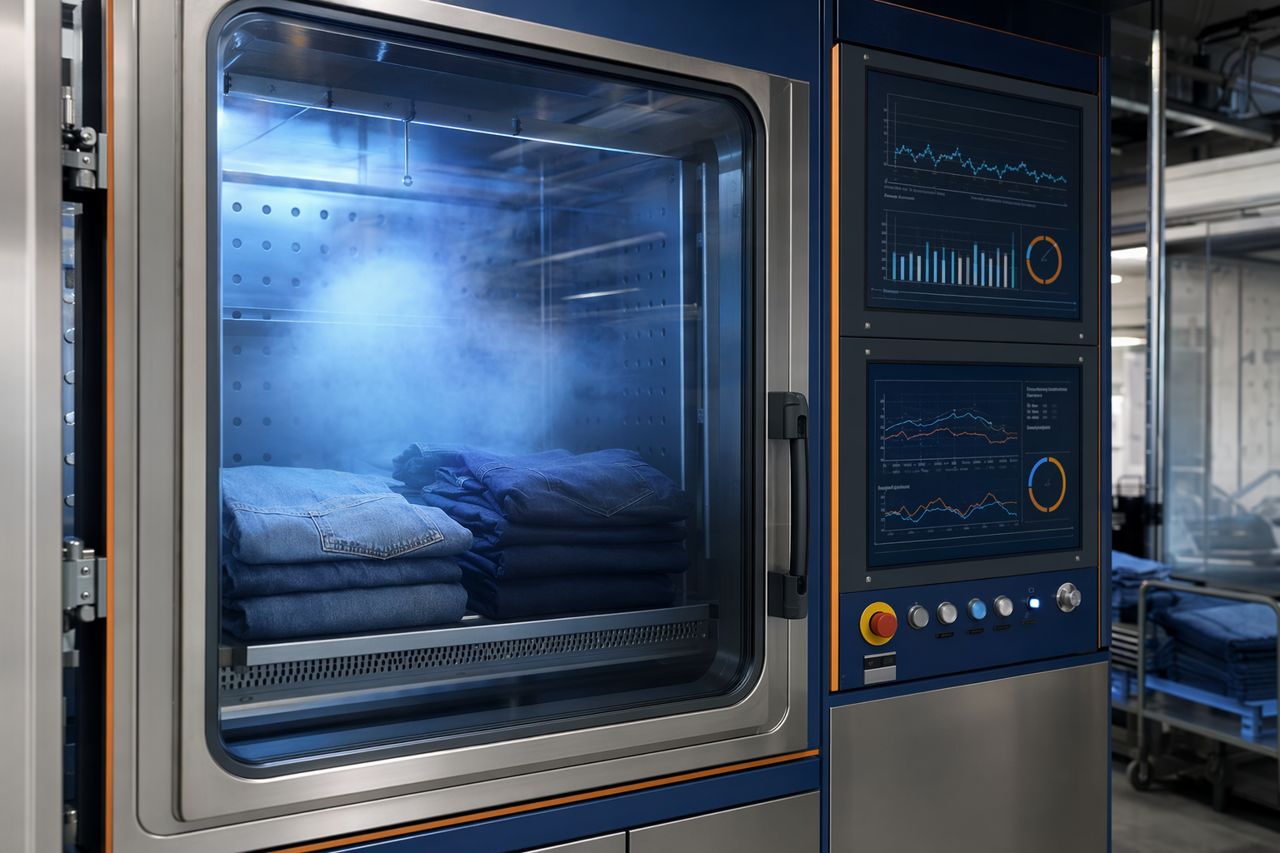
Ozone is useful when the target is controlled indigo oxidation and a cleaner cast with reduced water use. It can help create bright, fresh looks without the mechanical intensity of long wet cycles.
Ozone is often used for:
- Overall shade reduction
- Cast adjustment
- Lower-impact bleaching concepts
- Cleaner surface appearance
- Reduced chemical load compared with traditional oxidation routes
Where ozone performs best
Ozone is effective when the objective is shade movement, not deep mechanical abrasion. It can support lower water concepts and shorter wet exposure when the process is well controlled.
Where ozone needs support
Ozone does not solve every laundry variable. Fabric construction, indigo depth, moisture level, garment loading, and exposure uniformity still affect the result. Ozone also does not replace the need for wet-process softness, anti-backstaining control, and surface bio-polishing.
After ozone, enzymes can help clean the face, reduce fuzz, improve handfeel, and support consistent final shade.
The role of enzymes: wet-process control across real batches
Enzymes are the denim laundry’s adjustment tool inside the wash process. They work where garment loading, fabric variation, dye depth, and mechanical action meet.
The right enzyme system can support:
- Controlled cellulase abrasion
- Cleaner contrast after laser
- Backstaining reduction on pockets and weft areas
- Smoother fabric handfeel
- Reduced fuzz and surface hairiness
- Lower rewash risk from uneven shade
- Flexible processing across different water temperatures
- More consistent batches when fabric lots vary
For a plant running multiple brands, washes, and fabric weights, enzyme finishing is not just a chemistry step. It is a control point.
Matching the tool to the finishing objective
If the target is repeatable local wear
Use laser as the primary tool. Then use enzyme washing to soften the effect, clean the surface, and bring the dry pattern into the final shade range.
If the target is overall cast movement
Use ozone where the plant has strong control of garment moisture, exposure, and loading. Follow with enzyme-supported washing when handfeel, surface clarity, or shade balancing is required.
If the target is controlled abrasion and handfeel
Use enzyme systems as the main wet-process driver. Adjust dosage, temperature, cycle time, mechanical action, and anti-backstaining support to hit the required finish without pushing the fabric past its strength limit.
If the target is lower rewash
Treat laser, ozone, and enzymes as a sequence, not separate departments. Rewash often comes from mismatch: aggressive laser with weak cleanup, ozone shade shift without handfeel correction, or enzyme abrasion without enough backstaining control.
Practical process sequencing
A common modern route may look like this:
- Dry preparation and laser patterning
- Desizing or pre-wash, depending on fabric and garment condition
- Enzyme abrasion or bio-polishing step
- Ozone shade adjustment, where specified
- Anti-backstaining and cleanup wash
- Softening and final handfeel correction
- Quality check for shade, contrast, seam effect, pocket cleanliness, and touch
The exact order depends on the fabric, the brand standard, and the plant’s equipment. The key is to avoid treating each technology as a standalone fix.
What laundry teams should measure on the floor
A good finishing program should be judged by production outcomes, not by lab language alone. Track what affects shipment quality:
- Shade consistency from first batch to last batch
- Abrasion alignment with approved standard
- Backstaining on pocket bags, labels, weft zones, and light panels
- Handfeel after drying and conditioning
- Seam and edge contrast
- Fabric strength retention
- Rewash percentage by style
- Cycle time by finish route
- Water-temperature flexibility during seasonal changes
- Operator repeatability between shifts
These are the controls that decide whether a finishing route is commercially stable.
Common mistakes when combining laser, ozone, and enzymes
Over-driving laser effects
If laser contrast is too aggressive, the wet process may not recover a natural look. Enzymes can soften and clean the effect, but they should not be used to hide a dry-process error.
Using ozone without enough moisture control
Uneven moisture can create uneven shade movement. Ozone performance depends on consistent garment condition before exposure.
Running enzyme abrasion without anti-backstaining strategy
Indigo released during cellulase action can redeposit if the bath is not controlled. This leads to dull cast, dirty pockets, and reduced contrast.
Treating handfeel as an afterthought
A finish can meet shade but still fail in the buyer’s hand. Enzyme selection and softening sequence should be designed around the final touch, not added only at the end.
Where RivetTide fits
RivetTide supplies enzyme solutions for denim laundries that need controlled wet finishing around laser and ozone systems. Our focus is production stability: abrasion control, cleaner contrast, backstaining reduction, handfeel development, and process flexibility.
We support laundry teams evaluating enzyme systems for:
- Laser cleanup and post-laser surface conditioning
- Neutral or acidic cellulase-driven abrasion routes
- Low-backstaining wash concepts
- Bio-polishing for premium handfeel
- Ozone-compatible finishing sequences
- Temperature-flexible wash programs
- Rewash reduction on repeat styles
Buyer checklist: before changing the finishing route
Before approving a new laser, ozone, and enzyme sequence, confirm:
- The target shade range is defined with approved physical standards
- The abrasion map is locked before wet processing begins
- The enzyme step has a clear purpose: abrasion, cleanup, handfeel, or anti-backstaining support
- Garment load, liquor ratio, temperature window, and cycle time are practical for production
- Backstaining is checked on pockets, labels, light panels, and weft zones
- The route has been tested across fabric lots, not only one sample lot
- Operators can repeat the sequence without special intervention
- Rewash causes are recorded by defect type
Build the route around the finish, not the equipment
Laser, ozone, and enzyme finishing can work together when each technology is assigned to the right task. Laser delivers dry precision. Ozone supports shade movement. Enzymes bring wet-process control, surface cleanup, handfeel, and batch consistency.
For modern denim plants, the strongest route is the one that hits the approved standard repeatedly, protects fabric quality, and reduces rework.
If your laundry is tuning a laser-ozone-enzyme route or looking for a more stable enzyme supplier for denim washing, request a quote through the on-site form. RivetTide can review your target finish, process window, and production constraints before recommending an enzyme system.