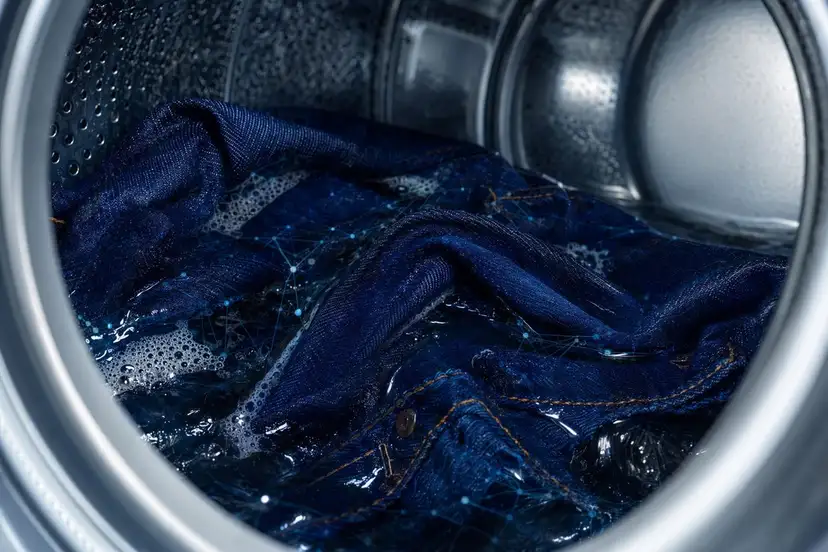
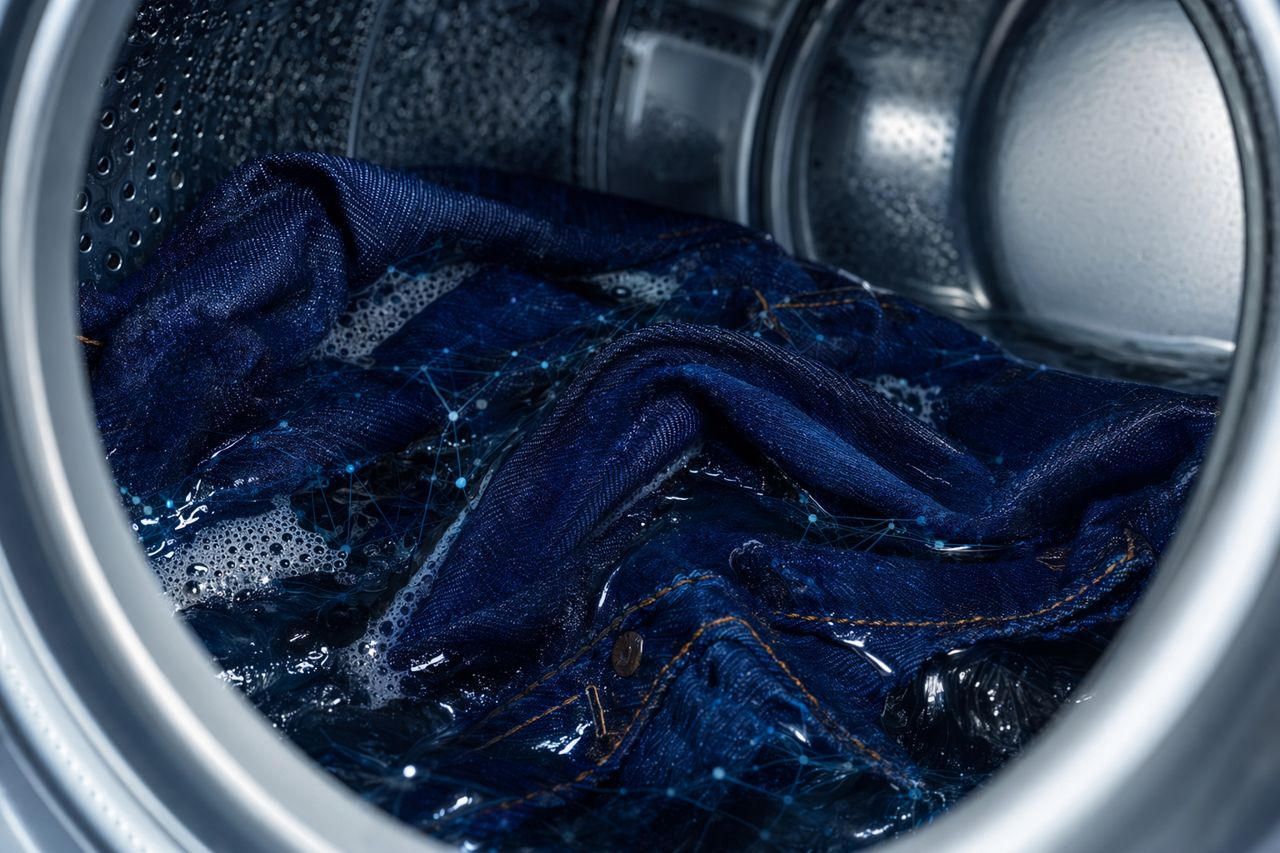
Stretch denim changes the laundry risk profile
Stretch denim is not just another indigo article in the wash range. Elastane-containing fabrics can expose weak points in a laundry process faster than rigid denim: harsh mechanical action, aggressive temperature ramps, uncontrolled abrasion, poor rinse strategy, and backstaining all show up as recovery loss, shade drift, growth in fit, or an uneven worn-down look.
For laundry managers, the target is not maximum abrasion. The target is repeatable abrasion that preserves stretch recovery, keeps shade inside the approved standard, supports handfeel, and reduces rewash. Enzyme selection is one part of that control system.
RivetTide supplies enzyme solutions for denim laundries that need plant-floor consistency across stretch, rigid, black, sulfur, vintage, and fashion wash programs.
Why stretch denim is less forgiving in wet processing
Stretch denim combines indigo-dyed cotton with elastic yarn structures that respond differently to heat, chemistry, and friction. During washing, the cotton surface, indigo layer, and stretch component are all under stress at the same time.
Common production symptoms include:
- Loss of stretch recovery after enzyme or stone wash stages
- Leg twist, growth, or dimensional movement after finishing
- Shade over-drop on high-friction zones
- Patchy abrasion where fabric tension varies inside the drum
- Blue cast redeposit on pockets, weft, labels, and pocketing
- Rougher handfeel after extended mechanical action
- Rewash caused by inconsistent panel-to-panel appearance
The risk increases when the laundry uses one fixed process logic for all stretch qualities. Fabric weight, yarn construction, dye depth, garment load, liquor behavior, and target abrasion all influence how much stress the garment can accept.
Enzyme abrasion: controlled surface action, not uncontrolled damage
Enzymes are used in denim washing to modify the cotton surface and help create abrasion, cleaner contrast, and improved handfeel. In stretch denim, that action needs tighter process discipline.
If the enzyme system is too aggressive for the fabric or the wash target, the laundry may see:
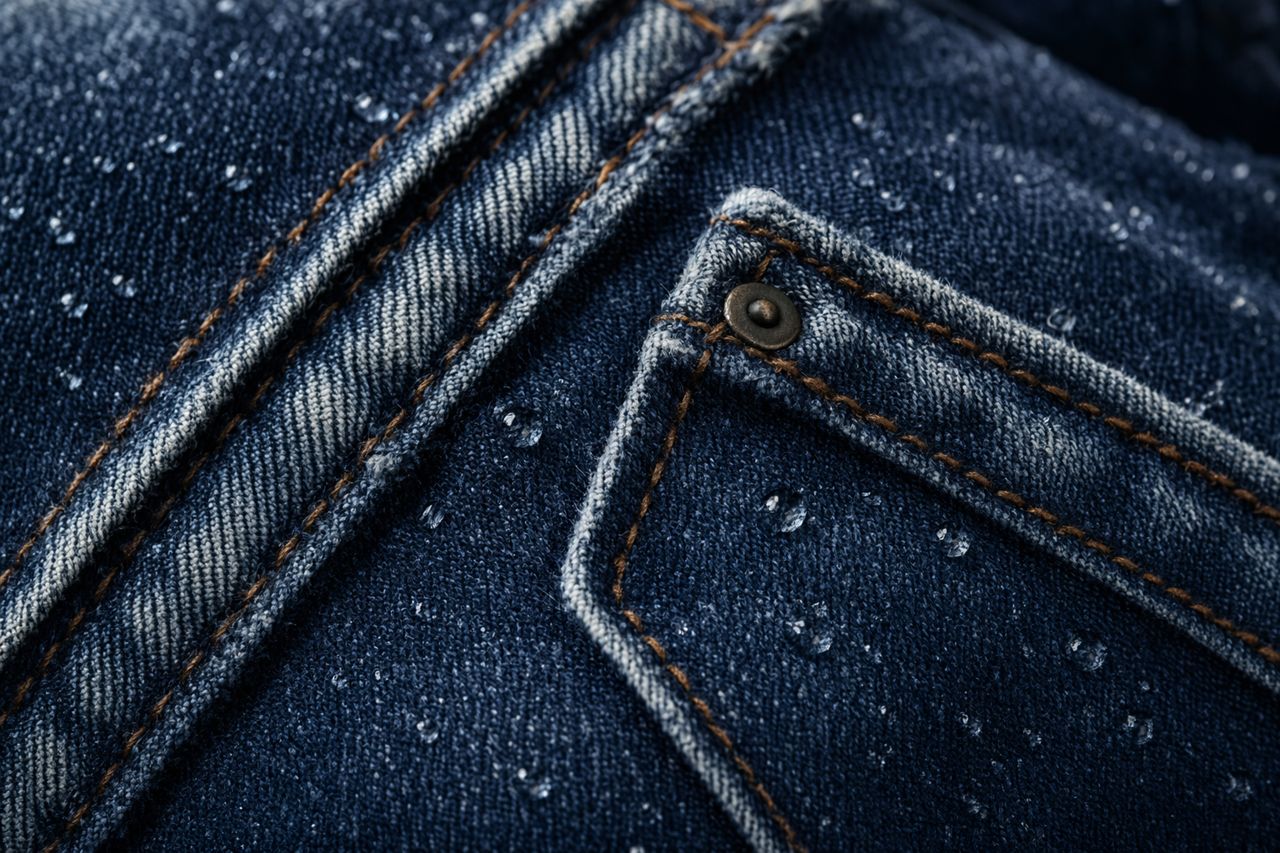
- Over-abrasion at seams, whiskers, hems, and pocket edges
- Excess lint and loose fiber contributing to backstaining
- Reduced fabric strength in high-contact zones
- Shade variation between batches with the same recipe
- Longer corrective rinsing and added finishing work
A production-fit enzyme supplier for denim washing should help the laundry match the enzyme profile to the garment type, target effect, water-temperature window, mechanical intensity, and required handfeel. The enzyme should support the finish target without forcing the laundry into excessive cycle time or uncontrolled fabric wear.
Heat exposure: recovery loss starts before the final finish
Stretch recovery problems are often blamed on the final drying or finishing step, but damage can start earlier. Repeated heat exposure during wet processing can affect elastic performance, especially when combined with high mechanical load and aggressive chemistry.
Risk points include:
- Hot process stages before the fabric has stabilized
- Long holds at elevated temperature
- Poor cooling before extraction or handling
- Heavy tumble action while the garment is under thermal stress
- Inconsistent temperature control between machines
RivetTide focuses on enzyme options that can work within practical laundry temperature conditions, giving plants more flexibility to build wash recipes around fabric protection rather than forcing every article into a narrow operating window.
Mechanical action: abrasion target versus stretch protection
Mechanical action drives much of the denim look. Drum speed, load size, garment-to-garment contact, liquor movement, and any abrasion aid all shape the final effect. Stretch denim, however, can respond badly to excessive impact and tension.
When mechanical action is not controlled, laundries may see:
- Uneven highs and lows across panels
- Extra wear on stress points
- Creasing that opens too aggressively
- Recovery loss from repeated extension inside the drum
- Shade mismatch between top, middle, and bottom positions in the load
The best enzyme program cannot compensate for an unstable mechanical process. Enzyme selection and machine action need to be set together: enough surface modification for the shade and abrasion target, not so much that the drum becomes the main source of damage.
Backstaining: the hidden driver of rewash
Stretch denim often needs a clean, premium appearance after abrasion. Backstaining works against that target by redepositing indigo and loose dye particles onto lighter zones, pocketing, labels, and weft yarns.
Backstaining control depends on several linked factors:
- Enzyme behavior during abrasion
- Dispersing and anti-redeposition support
- Rinse design and water exchange
- Foam control
- Load discipline
- Timing of neutralization and subsequent stages
Poor backstaining control can make a technically correct abrasion recipe look dull or dirty. It also increases sorting, hand correction, and rewash. For high-volume laundries, that cost is not limited to chemistry. It affects machine capacity, labor planning, delivery reliability, and shade approval.
How laundries can reduce stretch denim risk
A more controlled stretch denim program usually starts with process segmentation. Do not treat all stretch articles as one category.
1. Classify the garment before wash development
Separate by fabric weight, stretch content, dye depth, target shade, construction sensitivity, trim package, and desired handfeel. A light fashion wash and a deep vintage abrasion target should not automatically share the same enzyme profile.
2. Define the abrasion target in production terms
Use clear acceptance criteria:
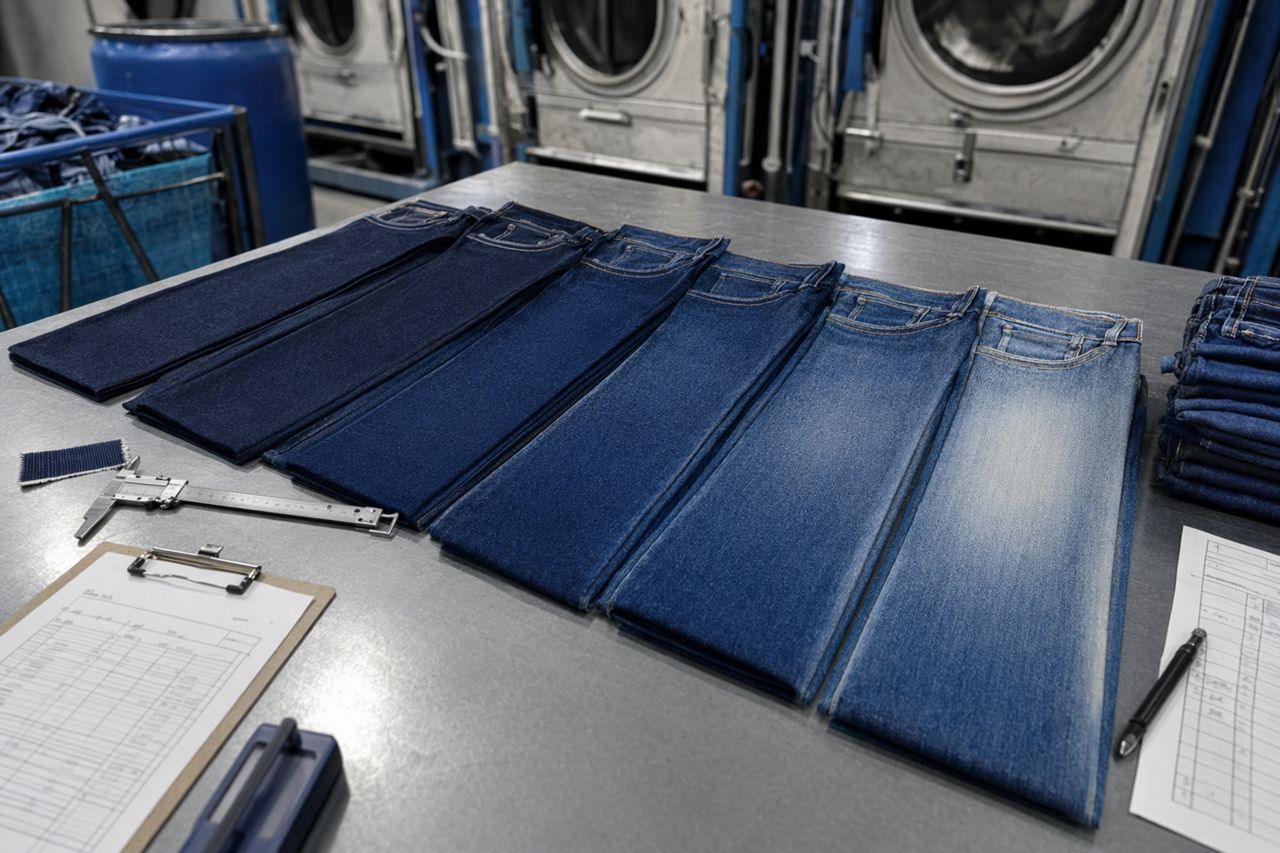
- Target shade range
- High-low contrast level
- Seam and edge wear tolerance
- Backstaining limit
- Handfeel expectation
- Recovery and fit retention requirement
- Maximum acceptable rewash rate
This helps align laundry, brand, and supplier around measurable production outcomes instead of vague visual language.
3. Match enzyme strength to mechanical intensity
If the drum action is already high, the enzyme system should not add uncontrolled surface attack. If the desired look needs cleaner contrast with lower mechanical stress, the enzyme system may need a different profile. The decision should be based on the fabric and finish target, not a standard rigid-denim recipe.
4. Build a rinse and anti-redeposition plan
Stretch denim often needs clean cast and controlled contrast. Rinse design, dispersing support, and timing matter. Reducing backstaining protects the approved shade and lowers the risk of extra correction cycles.
5. Validate recovery after the full process
Do not check stretch performance only after the enzyme stage. Evaluate after drying, softening, and final handling. Recovery loss can be cumulative across the full laundry route.
What to ask your enzyme supplier
When evaluating an enzyme supplier for denim washing, laundry managers should ask practical production questions:
- Which enzyme option fits stretch denim where recovery is a critical requirement?
- How does the product support abrasion without pushing excessive lint release?
- Can the enzyme work across the plant’s real water-temperature conditions?
- What support is available for reducing backstaining in indigo-heavy loads?
- How should enzyme selection change between soft wash, medium abrasion, and high-contrast vintage looks?
- What process adjustments help reduce rewash and shade drift at scale?
The answer should connect chemistry to batch consistency, shade control, machine loading, cycle design, and finishing outcome.
RivetTide support for stretch denim laundries
RivetTide works with denim laundries that need enzyme systems built for industrial wash conditions. Our focus is controlled abrasion, cleaner contrast, reduced backstaining risk, flexible processing, and consistent handfeel across repeat production.
Whether your plant is developing a new stretch denim program or troubleshooting recovery loss in an existing route, we can help align enzyme selection with the garment, wash target, machine action, and approval standard.
Request a quote
If you need enzyme support for stretch denim washing, contact RivetTide through the on-site request a quote form. Share the fabric type, target wash, main production issue, and current process constraints. We will respond with a practical recommendation for your laundry operation.